Loring Cares: Making a Difference Through Community, Charity,
and Compassion
As we reflect on 2025, we are reminded that building strong communities requires the same care and attention we give to the systems we design. At Loring Consulting Engineers, our commitment to service extends beyond blueprints and buildings, it’s about creating meaningful impact where it matters most, through acts of compassion, mentorship, and support that strengthen the foundation of our communities.
Promoting health and wellness has been a central focus of our efforts. Breast cancer awareness remains a cause close to our hearts, with employees uniting to support research, survivors, and families. This year, our teams in New York, Washington, D.C., and Maryland joined the American Cancer Society Breast Cancer Walk, while our Jamaica office participated in the Reach to Recovery Pink Run, standing alongside those affected by this disease. Additionally, our North Carolina staff took part in the American Heart Association Heart Walk, encouraging cardiovascular health and wellness within our communities.
Equally, we strive to uplift the next generation, creating moments of joy and pathways for success. Through the NYC Service Secret Snowflake Program, Loring’s employees help meet the needs of underprivileged youth, providing some comfort and joy during the holiday season. We also support youth through scholarships and mentorship programs with the American Council of Engineering Companies (ACEC), the ACE Mentor Program, Penn State University, and New York Institute of Technology, offering guidance and encouragement that help students interested in careers in engineering pursue their dreams. By combining immediate support with long-term guidance, our goal is to help youth feel supported, encouraged, and empowered to embrace the future.
Our commitment to community also extends to those facing basic needs. In New Jersey, our team volunteered at the Trenton Area Soup Kitchen, helping provide meals and comfort to individuals and families experiencing food insecurity.
Additionally, when Hurricane Melissa significantly impacted western Jamaica, Loring wanted to help in a meaningful way. The New York office organized a clothing drive, and our companywide Toy Drive is currently underway, with employees donating toys for the Christmas season to bring holiday cheer to children who have endured loss and disruption—acts of solidarity and compassion across borders.
Across every initiative, from health and education to humanitarian relief and holiday giving, the heart of our work is compassion. By stepping forward, we strengthen the communities around us, creating connections, hope, and lasting impact. At Loring, compassion is the foundation upon which we build—not just systems, but stronger, kinder, and more resilient communities.
LPCA Breaks Ground on Historic Theatre Building Renovation
Lake Placid, NY: The Lake Placid Center for the Arts (LPCA) held a groundbreaking ceremony on Monday, September 22nd to kick off the construction phase of a Capital Project to modernize and expand the 53-year-old Theatre Building.
An Artful Gathering
100 guests gathered in front of the Theatre Building to celebrate the milestone, including the Arts Center’s Executive Director James Lemons and Managing Director Jon Donk and speakers Katie Steger, Director of Capital Projects for the New York State Council on the Arts; the Honorable Dan Stec, New York State Senate; Emily Politi, Town Council Person for the Town of North Elba; and members of the Arts Center’s Board of Directors, Cathy Johnston (Treasurer) and Sarah Galvin (Co-Vice President).
In true Arts Center fashion, the groundbreaking ceremony aimed to entertain and inspire with a performance by local musician Charlie Reinertsen as well as a dedication of the Arts Center’s garden to Ruth Hart, longtime friend and past President of the LPCA.
About the Renovation
The Capital Project encompasses a large-scale renovation of the Theatre Building, designed by the renowned architecture firm Marvel Designs. Charcoalblue is serving as the project’s Theatre Consultant and Allegrone Companies is the Construction Manager.
The renovation will address a myriad of infrastructure challenges that have developed after over 50 years of service to the community. The building’s capacity has been limited by lack of accessibility, crumbling foundations, leaking roofs, and outdated mechanical systems – including heating and cooling – that are critically due for an update. The renewed facility will be fully accessible and welcoming for all, with important structural and technological upgrades that will make for a sustainable community resource that preserves the unique character of the original Arts Center. Besides a new state-of-the-art theatre, the updated building will feature a new art gallery, a dedicated education space, an expanded lobby, revitalized green spaces and improved traffic flow for the parking lots.
The project is on track to re-open a revitalized building by July 2027. During construction, all programs will continue in the Annex Building on the Arts Center’s campus or in other partner venues in the Tri-Lakes area. The Annex has already begun hosting Fall programs and will house a temporary 70-seat stage/screening room, an art gallery and classrooms for dance, painting, drawing, weaving and ceramics workshops.
State Sen. Dan Stec expressed, “the groundbreaking for the renovation of the Theatre Building marks the start of a major transformation for our region. With this project, the Arts Center’s status as a hub for culture and creativity will be stronger than ever. I can’t wait to see this project when it’s completed.”
Capital Campaign Goal
Monday’s event also announced the organization’s $33M Capital Campaign to support the project. LPCA has raised $22 million toward its $33 million capital campaign goal during the quiet phase of fundraising. This remarkable progress reflects the leadership of Campaign Co-Chairs and LPCA Board Members Debbie Heidecorn and Cathy Johnston, the commitment of the entire Board of Directors, and the work of the Capital Campaign Committee. A transformative $7.5 million grant from New York State Council on the Arts’ Large Capital Improvement program anchors this early success, joined by support from the Town of North Elba LEAF Fund and federal commitments supported by Senator Schumer, Senator Gillibrand, and Congresswoman Elise Stefanik, including a confirmed commitment of $1 million from the Northern Border Regional Commission, and a pending $1 million award sponsored by Senators Gillibrand and Schumer through the U.S. Department of Agriculture. Several foundations, including the Stewart’s/Dake Family, also provided major gifts. More than sixty individual and board donors, from seven-figure leadership gifts to community contributions, have invested in LPCA’s vision for a modern, LEED Silver–certified cultural center. The arts and fundraising consulting firm A.D. Hamingson & Associates are serving as lead strategists for the capital campaign. “We’re incredibly grateful for the profound support of our donor community to date,” said Arts Center Executive Director James Lemons, “This renovation will make it possible for us to carry out our most important work – serving as a community space where all are invited to share in the profound human experience of making and witnessing art together. With a strong new foundation in our revitalized building, we look forward to sharing meaningful arts experiences with people of all ages for many decades to come.”
Brand New Again
Along with the official start of construction, the Arts Center unveiled a new brand for the organization. Lake Placid Center for the Arts (LPCA) will become Arts Center Lake Placid, demonstrating the Center’s dedication to putting the organization’s mission first. As the campus transforms over the coming year and a half, the Arts Center’s brand update will take shape, to be fully displayed throughout the revitalized Theatre Building and grounds by Summer of 2027.
All those interested in learning more about the project and the Capital Campaign can visit https://frontandcenter.lakeplacidarts.org/.
About the Arts Center Lake Placid
Nestled in an Olympic village, the Arts Center Lake Placid is a year-round treasure to residents and visitors of the Adirondacks and is the premier art and cultural hub of the region. Orchestrating quality programming, performances, rotating art exhibitions, and education experiences to residents and visitors alike, the Arts Center provides an ensemble of offerings in music, theatre and dance, and supports local, regional and national artists in its Fine Arts Gallery. At the heart of this hub is hands-on learning experiences for children exploring their creativity and adults finding new passions. As a leading organization, the Arts Center collaborates with other Adirondack non-profit partners to build, support and cultivate the arts community. Inspiring excellence in the arts for generations, the Arts Center continues to thrive today at its unique and captivating Lake Placid campus.

 Images: Charlie Reinertsen, Marvel
Design Team:
Images: Charlie Reinertsen, Marvel
Design Team:
Images: Charlie Reinertsen, Marvel
Design Team:
- Marvel
- Charcoalblue
- Loring
- McLaren
- MW Skins
- Tillotson
- CCI
- Kimley-Horn
- Allegrone
- DBI Projects
- ADH&A
Central Utilities
Central utility systems generate and distribute the cooling, heating, and power that energize various buildings and processes. While campuses, shiny buildings, and historic structures are visible, the central utility plant is the unseen backbone that keeps them functional. At Loring, we have been involved in many central utility and infrastructure projects, including:
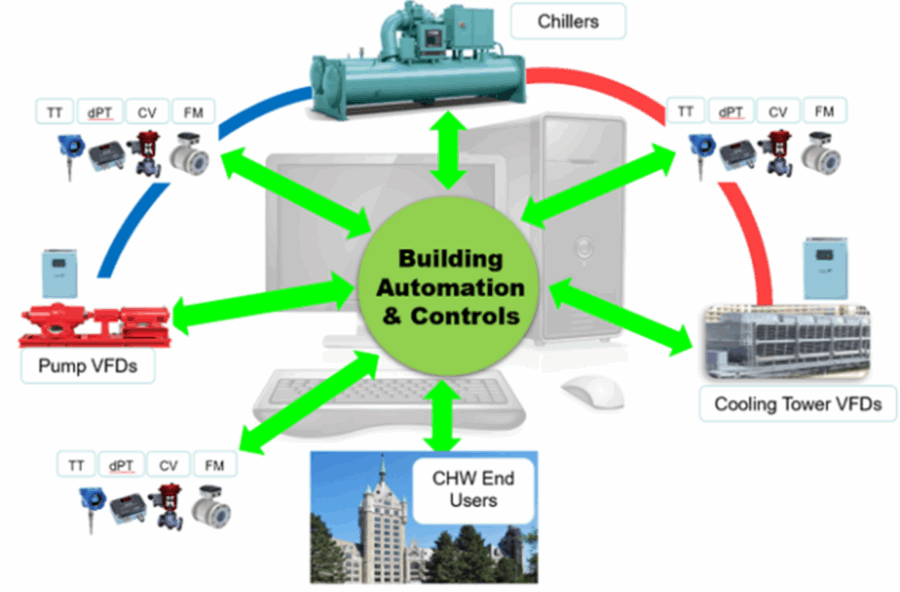 The energy sector's evolution requires a new approach to how we generate, distribute, and use power. While transitioning to technologies like electrification, heat pumps, and energy storage, existing systems must remain efficient. The key to this is optimizing system-wide performance, not just improving individual components. For example, a central plant's efficiency relies on the integrated operation of equipment like chillers and cooling towers. Providing a centrifugal chiller with colder condenser water, or tailoring energy distribution to exact demand, provides significant energy savings that component-level improvements alone cannot achieve.


 Northern Westchester Hospital Steam Absorption Chillers
 For more information on Central Utilities, contact Nitin Pathakji, CEM
Vice President, Central Utilities
npathakji@loringengineers.com
For more information on Central Utilities, contact Nitin Pathakji, CEM
Vice President, Central Utilities
npathakji@loringengineers.com
- Chiller plants
- Boiler plants
- Thermal storage systems including ice and water
- Battery Storage systems
- Cogeneration systems
- On-site generation
- Microgrids
- Electrical system upgrades
- Renewable energy systems including biogas, biomass and solar
The energy sector's evolution requires a new approach to how we generate, distribute, and use power. While transitioning to technologies like electrification, heat pumps, and energy storage, existing systems must remain efficient. The key to this is optimizing system-wide performance, not just improving individual components. For example, a central plant's efficiency relies on the integrated operation of equipment like chillers and cooling towers. Providing a centrifugal chiller with colder condenser water, or tailoring energy distribution to exact demand, provides significant energy savings that component-level improvements alone cannot achieve.
Case Study: Northern Westchester Central Chilled Water Plant
Every project has unique in terms of its requirements, challenges and deliverables. Loring recently completed a 4,000 Ton central chiller plant project for Northern Westchester Hospital.- Plant size: The existing central plant consisted of 1,800 tons of chilled water system. Due to expansion of the hospital and repurposing of some of the building areas, the long-term need for the hospital was estimated to be 3,000 Tons. The facility selected the option of utilizing three electric centrifugal chillers and two steam absorption chillers. This increase in the capacity and development of the central plant had to be incorporated in the same footprint of the existing plant. Along with this, the hospital had to remain fully functional with minimal downtime. The hospital's existing central plant, with 1,800 tons of chilled water capacity, required expansion due to growth and building repurposing. The long-term need was projected at 3,000 tons. The solution chosen involved integrating three electric centrifugal chillers and two steam absorption chillers within the existing plant's footprint, all while maintaining full hospital functionality with minimal downtime.
Northern Westchester Central Chilled Water Plant
- Hydraulic Analysis: Loring performed detailed hydraulic analysis for distribution of chilled water throughout the campus. The evaluation was performed for the short-term needs, intermediate term needs and long-term needs of the facility. The facility had indicated that they have trouble getting chilled water in certain spaces of the hospital. The hydraulic evaluation revealed the bottleneck in distribution system, chilled water pump head requirement and remote locations for pressure sensors.
- Change of chilled water Delta T: Due to increase in the chilled water capacity, the chilled water flow increased substantially. With the main distribution pipes running in a tunnel under the building, replacing this would have become a very intrusive process to a fully functional hospital during construction. As a part of the new plant design, the chilled water delta T was increased thereby allowing us to utilize the existing distribution piping network.
- System efficiency: Incorporating magnetic bearing centrifugal chillers provided substantial efficiency improvement if the condenser water temperatures can be depressed to as low at 40 deg F. The absorption chillers need to maintain condenser water temperatures in excess of 75 deg F to avoid crystallization. To maximize the efficiency of the system, condenser water controls were separated to meet the needs of each system thereby providing optimum efficiency for each system. Due to efficiency improvements, the facility received rebate of over $400,000 from local utility.
- Chilled water temperature: The facility is located in a valley and experiences high humidity ambient conditions. Due to the nature of the application, operating rooms (ORs) and intensive care units (ICUs, NICUS) are sensitive to humidity requirements and any change in chilled water temperature creates unfavorable conditions in these spaces. As a part of the central plant project, new sequence and systems were implemented where in the facility always receives set chilled water temperature. During start-up and shut down of chillers, automatic systems modulate to ensure that chilled water leaving the central plant is always maintained at set point.
BAS System Screen
- Automatic Central Plant Controls: New building automation system (BAS) incorporates fully automatic functioning of chillers and associated accessories. When the demand for cooling changes, permissive are displayed on the screen to either start or stop a chiller. Based on the operating executive’s preference for the next chiller to be turned on or off, associated chilled and condenser water pumps, cooling towers are automatically turned on or off.
Northern Westchester Hospital Steam Absorption Chillers
Get In Touch
For more information on Central Utilities, contact Nitin Pathakji, CEM
Vice President, Central Utilities
npathakji@loringengineers.comLORING NYC IS NOW
NEBB CERTIFIED IN HVAC TESTING AND BALANCING
At Loring, we take great pride in being more than just a prominent design engineering firm. Loring’s Commissioning Group and Energy Services Group were established in 2008 by the firm’s current CEO, Oneil Gayle. This initiative marked a strategic expansion beyond traditional MEP design services, enabling Loring to provide clients with comprehensive support throughout the building lifecycle. In order to demonstrate the exceptional quality and reliability of our Commissioning Group through industry-recognized validation, Loring’s Headquarters office, located in New York City, decided to pursue NEBB Certification.
For decades, NEBB has been recognized as the premier certification organization for firms and professionals in the building systems industry, upholding high ethical and technical standards. NEBB trains, qualifies, and tests individuals across various disciplines to ensure they consistently deliver high-quality work. Beyond certification, NEBB supports its member firms through a Quality Assurance Program, which offers added confidence to clients receiving NEBB-certified services. If concerns arise regarding completed work, end users can contact NEBB to initiate an independent third-party review, which ensures the services meet established standards and are performed correctly.
Offering the best possible service at the highest standards has always been a priority at Loring. In line with that commitment, we are excited to announce that the New York City Commissioning Group is now NEBB Certified in both Commissioning and Testing, Adjusting, and Balancing (TAB) services. Obtaining this new credential is just one more way in which Loring continues to demonstrate its leadership in the industry and commitment to providing our clients with the most comprehensive and reliable building performance solutions.
 For more information on Loring’s Commissioning and TAB services, contact Giancarlo Cosini, PE
Vice President & Commissioning Group Leader
GCosini@loringengineers.com
For more information on Loring’s Commissioning and TAB services, contact Giancarlo Cosini, PE
Vice President & Commissioning Group Leader
GCosini@loringengineers.com
Get In Touch
For more information on Loring’s Commissioning and TAB services, contact Giancarlo Cosini, PE
Vice President & Commissioning Group Leader
GCosini@loringengineers.com Loring's 2025 Environmental, Social and Governance Report

Loring Consulting Engineers Achieves MBE Status
After attaining majority minority status in 2024 and with receipt of its formal MBE certification last month, Loring is among the largest and longest-standing building systems engineering firms to achieve this designation in New York City. Throughout its nearly 70 years as a leader in mechanical, electrical, plumbing and fire protection engineering, Loring has been fueled by the belief that differences foster innovation, creativity, and a broad range of ideas, ultimately leading to better decision-making and business outcomes. The firm has realized milestones both in employee and leadership representation: more than 56% of employees—and 54% of senior leadership—come from traditionally underrepresented minorities, including Black and Asian-Pacific Islander.

“I am so proud to be at the helm of Loring in this moment, and I don’t take for granted the heights I’ve been able to reach here. We will continue to exemplify our principle that fostering an environment of belonging for all is good business, and to do the excellent work Loring is known for—now with even greater opportunities to take the lead on critical projects that shape the lives of so many,” says Gayle. “For Loring, MBE certification is a reflection of our continued commitment to hire the best talent wherever it exists and promote from within,” says Loring Principal and Executive Committee Member Steve Kenah.
Sustainable Heating, Ventilating, and Air Conditioning (HVAC) Design for the Life Sciences
Life science facilities present unique challenges in incorporating cost-effective, sustainable designs that provide tangible energy savings to meet client expectations. One solution to achieve this is to engineer large air-to-air energy recovery systems. Air-to-air solutions have large space requirements in both footprint and volume that is a luxury not often available in urban campuses. One alternative method of achieving the goal of energy savings with reliable operation while addressing limited space constraints is to provide high-performance run-around heat recovery systems. These systems utilize familiar components such as pumps, heat exchangers, filters, and coils, making the solution easy to understand and maintain. The design includes a bypass around the exhaust airstream coil with a walk-in service plenum, allowing 24/7 operation of the building's exhaust airstream while performing required maintenance. Backed up by the manufacturer’s performance guarantee, the owner is provided with a cost-effective, sustainable design and have the security that the system will reduce the building’s energy consumption and lower annual energy costs.
Isometric View of Typical Heat Recovery Hydraulic Unit Skid
 Typical Heat Recovery Single Line Diagram
 For more information on how Loring can help you with your life science challenges, contact Ivan Zgombic, PE.
Principal
Email: IZgombic@loringengineers.com
For more information on how Loring can help you with your life science challenges, contact Ivan Zgombic, PE.
Principal
Email: IZgombic@loringengineers.com
Case Study: Laboratory Project in New York
Loring recently completed a life sciences laboratory project in New York utilizing a high-performance run-around heat recovery system. This system captures energy from the building's exhaust system, which would otherwise be wasted. Dedicated coils in the building's multiple air-handling units and exhaust fan systems receive a glycol-water solution that is circulated between the outside air and exhaust air airstreams, while maintaining complete separation between the two to prevent potential cross contamination. The installed run-around heat recovery system offsets nearly 100% of the building's pre-heat ventilation load and approximately 17.5% of the building's ventilation cooling loads. Given New York's challenging climate, choosing a system that was reliable, efficient, and simple was paramount to the project's success. Typical Heat Recovery Single Line Diagram
Get In Touch
For more information on how Loring can help you with your life science challenges, contact Ivan Zgombic, PE.
Principal
Email: IZgombic@loringengineers.comLoring Receives National Recognition Award for New Jersey Statehouse Renovation
We were honored to attend the ACEC National Recognition Awards Gala in Washington, DC on May 20th for the 2025 Engineering Excellence Awards. Our team received a National Recognition Award for the New Jersey Executive Statehouse Renovation and Restoration project, which previously received the Grand Honor Award for Non-Transportation Projects at the ACEC-NJ Engineering Excellence Awards Banquet in March. We’re proud of the work behind this achievement and grateful to everyone who contributed to the project’s success. Special thanks to Oneil Gayle, Vincent Farese, Nitish Joy, and J. Michael Galway for representing Loring at the event.


Ownership and Project Success in Healthcare Construction
Loring’s Healthcare Group Leader, Rahul Tikekar, PE, MS, MBA, recently brought his expertise to two Association of Medical Facility Professionals (AMFP) events, where he shared insights into the essential role of ownership in delivering successful healthcare projects.
Shaping the Future of Healthcare Facilities in New York and Beyond
 10th Greater New York Hospital, Outpatient Facilities & Medical Office Buildings Summit
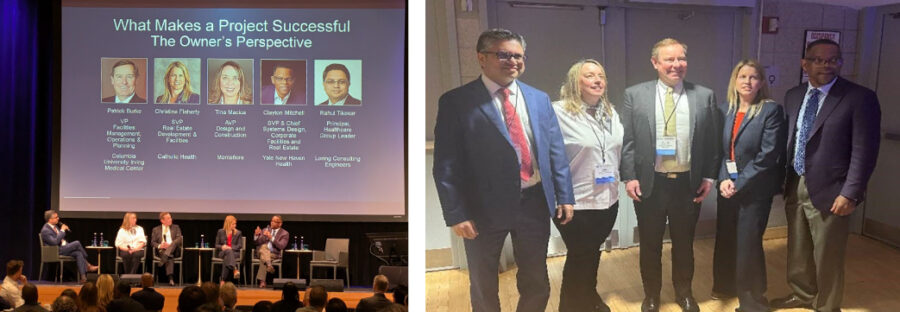
On April 15, Rahul moderated a panel at the 10th Greater New York Hospital, Outpatient Facilities & Medical Office Buildings Summit, held at Columbia University. The session, titled “What Makes a Project Successful – The Owner’s Perspective,” featured senior leaders from Columbia University Irving Medical Center, Catholic Health, Montefiore, and Yale New Haven Health. The discussion moved beyond conventional project metrics like budget and schedule, highlighting deeper drivers of success: innovation, adaptability, resilience, and stakeholder engagement.
Championing Leadership and Collaboration
10th Greater New York Hospital, Outpatient Facilities & Medical Office Buildings Summit
On April 15, Rahul moderated a panel at the 10th Greater New York Hospital, Outpatient Facilities & Medical Office Buildings Summit, held at Columbia University. The session, titled “What Makes a Project Successful – The Owner’s Perspective,” featured senior leaders from Columbia University Irving Medical Center, Catholic Health, Montefiore, and Yale New Haven Health. The discussion moved beyond conventional project metrics like budget and schedule, highlighting deeper drivers of success: innovation, adaptability, resilience, and stakeholder engagement.
Championing Leadership and Collaboration
 4th Washington, DC | Maryland | Virginia Hospital, Outpatient Facilities & Medical Office Buildings Summit
Two days later, Rahul participated in the 4th Washington, DC | Maryland | Virginia Hospital, Outpatient Facilities & Medical Office Buildings Summit, held at the DesignForce Knowledge Center. He joined panelists from Johns Hopkins, Children’s National, and Page Architecture in a session titled “What Makes a Great Owner.” The conversation centered on how visionary, engaged ownership is essential to aligning multidisciplinary teams, fostering true collaboration, and delivering long-term project value. Drawing on his extensive experience partnering with healthcare systems, design firms, and construction teams, Rahul emphasized that strong owner leadership is often the driving force behind project cohesion, innovation, and successful outcomes..
Advancing Healthcare through Thought Leadership
At Loring, we believe that great healthcare design begins with great partnerships. We’re proud to contribute to these critical industry conversations and are committed to deepening the conversation around ownership, collaboration, and success in healthcare facilities planning and engineering. As the healthcare landscape continues to evolve, we remain committed to delivering thoughtful, forward-looking engineering solutions that support our clients and their communities.
4th Washington, DC | Maryland | Virginia Hospital, Outpatient Facilities & Medical Office Buildings Summit
Two days later, Rahul participated in the 4th Washington, DC | Maryland | Virginia Hospital, Outpatient Facilities & Medical Office Buildings Summit, held at the DesignForce Knowledge Center. He joined panelists from Johns Hopkins, Children’s National, and Page Architecture in a session titled “What Makes a Great Owner.” The conversation centered on how visionary, engaged ownership is essential to aligning multidisciplinary teams, fostering true collaboration, and delivering long-term project value. Drawing on his extensive experience partnering with healthcare systems, design firms, and construction teams, Rahul emphasized that strong owner leadership is often the driving force behind project cohesion, innovation, and successful outcomes..
Advancing Healthcare through Thought Leadership
At Loring, we believe that great healthcare design begins with great partnerships. We’re proud to contribute to these critical industry conversations and are committed to deepening the conversation around ownership, collaboration, and success in healthcare facilities planning and engineering. As the healthcare landscape continues to evolve, we remain committed to delivering thoughtful, forward-looking engineering solutions that support our clients and their communities.
10th Greater New York Hospital, Outpatient Facilities & Medical Office Buildings Summit
On April 15, Rahul moderated a panel at the 10th Greater New York Hospital, Outpatient Facilities & Medical Office Buildings Summit, held at Columbia University. The session, titled “What Makes a Project Successful – The Owner’s Perspective,” featured senior leaders from Columbia University Irving Medical Center, Catholic Health, Montefiore, and Yale New Haven Health. The discussion moved beyond conventional project metrics like budget and schedule, highlighting deeper drivers of success: innovation, adaptability, resilience, and stakeholder engagement.
Championing Leadership and Collaboration
4th Washington, DC | Maryland | Virginia Hospital, Outpatient Facilities & Medical Office Buildings Summit
Two days later, Rahul participated in the 4th Washington, DC | Maryland | Virginia Hospital, Outpatient Facilities & Medical Office Buildings Summit, held at the DesignForce Knowledge Center. He joined panelists from Johns Hopkins, Children’s National, and Page Architecture in a session titled “What Makes a Great Owner.” The conversation centered on how visionary, engaged ownership is essential to aligning multidisciplinary teams, fostering true collaboration, and delivering long-term project value. Drawing on his extensive experience partnering with healthcare systems, design firms, and construction teams, Rahul emphasized that strong owner leadership is often the driving force behind project cohesion, innovation, and successful outcomes..
Advancing Healthcare through Thought Leadership
At Loring, we believe that great healthcare design begins with great partnerships. We’re proud to contribute to these critical industry conversations and are committed to deepening the conversation around ownership, collaboration, and success in healthcare facilities planning and engineering. As the healthcare landscape continues to evolve, we remain committed to delivering thoughtful, forward-looking engineering solutions that support our clients and their communities.Loring Celebrates Two Wins at ACEC New York Engineering Excellence Awards
Loring is proud to celebrate two standout projects honored by the ACEC New York Engineering Excellence Awards!
Platinum Award
SUNY Purchase Clean Energy Master Plan – A Roadmap to a Sustainable Net Zero Campus
This project is paving the way for a greener future, delivering strategic, forward-thinking solutions for a net-zero campus.
 Gold Award
Bronx Zoo – Con Edison Switchgear Upgrade
A project dedicated to enhancing resilience and reliability at one of New York's most iconic destinations.
Gold Award
Bronx Zoo – Con Edison Switchgear Upgrade
A project dedicated to enhancing resilience and reliability at one of New York's most iconic destinations.
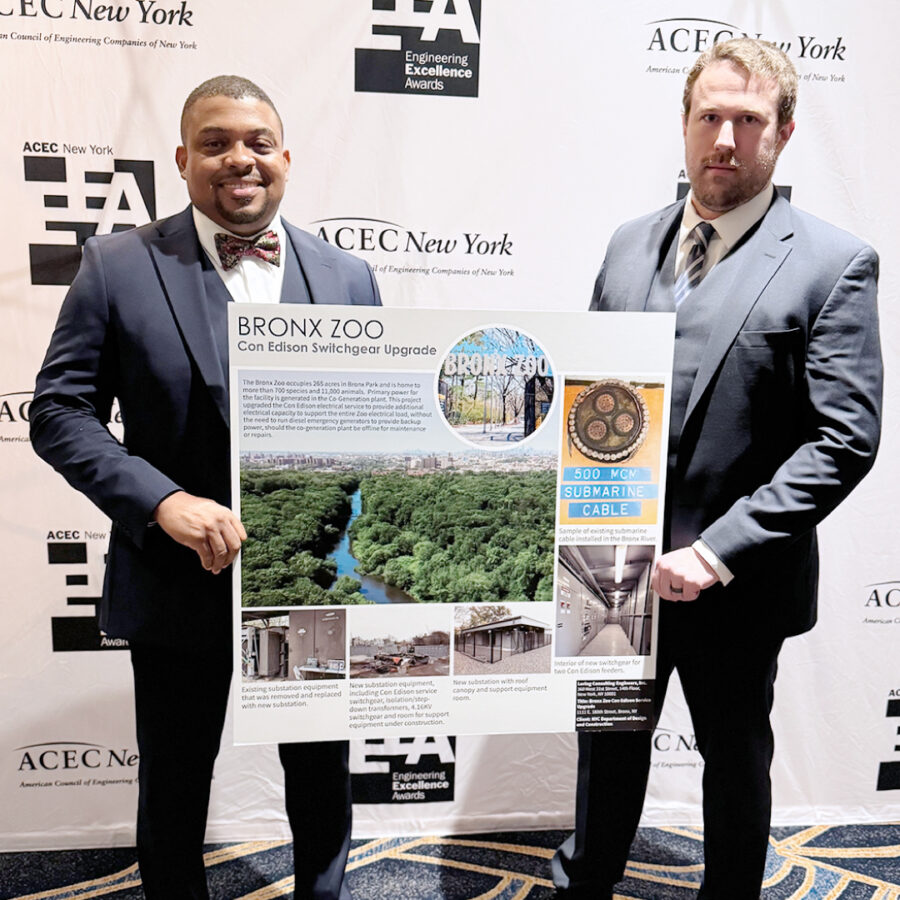 These awards reflect the dedication, collaboration, and innovation our team brings to every project. Congratulations to everyone who made these achievements possible!
Gold Award
Bronx Zoo – Con Edison Switchgear Upgrade
A project dedicated to enhancing resilience and reliability at one of New York's most iconic destinations.
These awards reflect the dedication, collaboration, and innovation our team brings to every project. Congratulations to everyone who made these achievements possible!